


HIRE A LIVE ARTIST FOR YOUR CORPORATE EVENT
In the profession of live graphic recording, taking visual notes in real time, live drawing at events and meetings which we know by the names #graphicrecording, #livescribing, #sketchnoting and other attempts at describing a profession as creative as it is complexWe are faced with two fundamental scenarios:
Styles of artists so similar to each other that they seem to be mass-produced, and, in this day and age, almost produced with artificial intelligence.
Although these styles are based on a synthesis that must be clear and precise from the outset, a flat or static and overly schematic drawing style can work very well in some environments, but not in others.
_ Styles of such unique artists whose results are themselves works of art, emotional and striking illustrations that, once again, may work better in some environments than in others.
Therefore, the first step I recommend in choosing the ideal artist to accompany you at your event is to answer this question:
¿What IMPACT do you want to have on your audience?
And next, access this article where I describe the fundamental characteristics of the work of each of these fascinating artists.
Please also note that depending on the context of the meeting or event, the time available, and the client's needs, you may see some of these styles mixed together.
Live sketching of ideas is a reflection of thought.
The clarity or complexity of the issues shared, and of the person processing them. That is why it is enriching to have someone from outside your environment. Someone who can see the situation of your project, your process, your strategy, from the long-awaited ‘outside the box’
HORROR VACUI
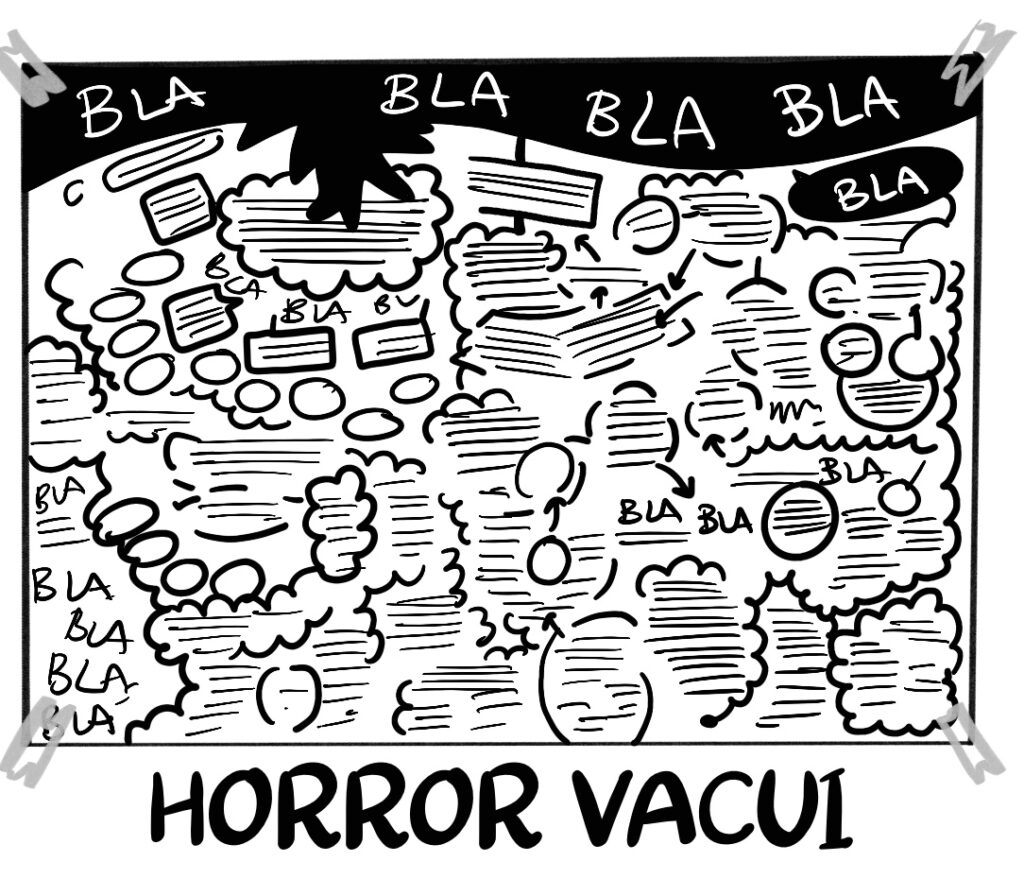
If I have just said that the drawing will be a reflection of thought, this artist will leave nothing uncovered.
The result, at first glance, may be overwhelming for the public. But it will undoubtedly invite them to take a closer look and analyse the points that have been raised in detail.
ICONIST
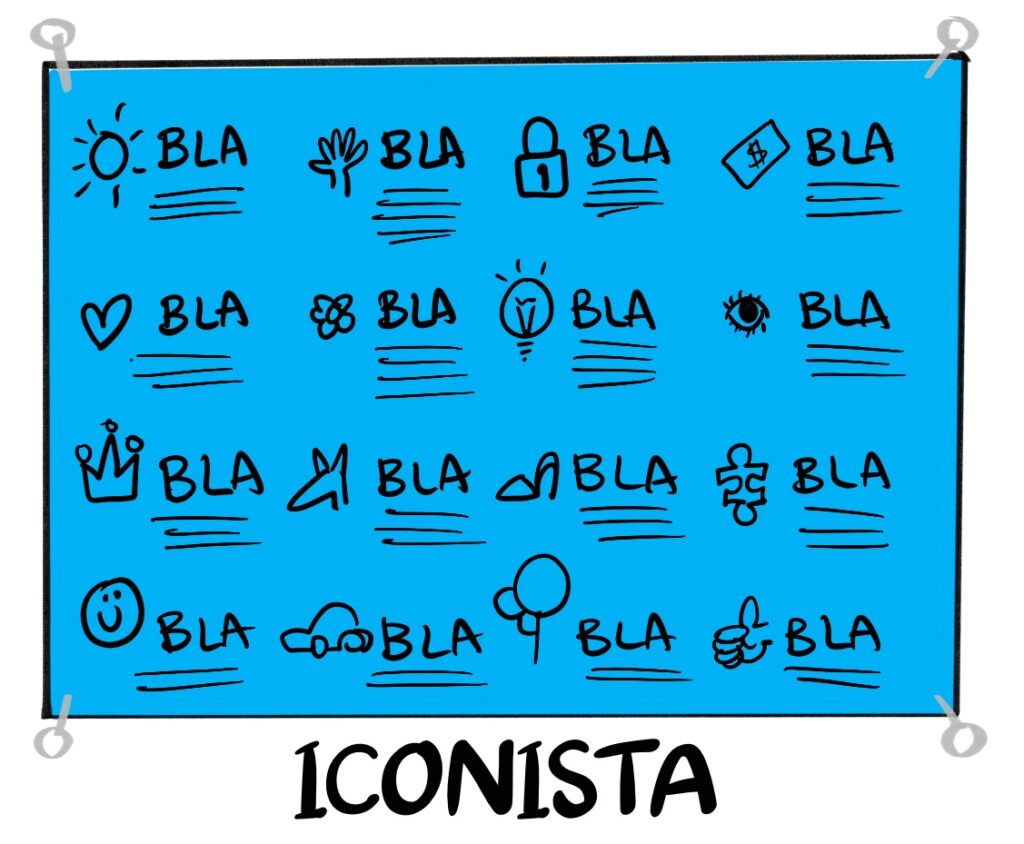
This artist's work is clean and tidy.
It fulfils the need for illustration by including some very simple and repetitive drawings (icons), with hardly any visual metaphors or drawn stories.
The topics covered, although organised, are not linked to each other, so reading is linear (in rows or columns) and it is difficult to analyse causes and consequences.
Artistically, it depends on the quality of the drawings and calligraphy used, since otherwise the summary may appear ‘flat’ and lacking in emotion.
However, this type of summary works very well for creating social media content, as it can easily be transformed into carousels.
MAPA MENTAL
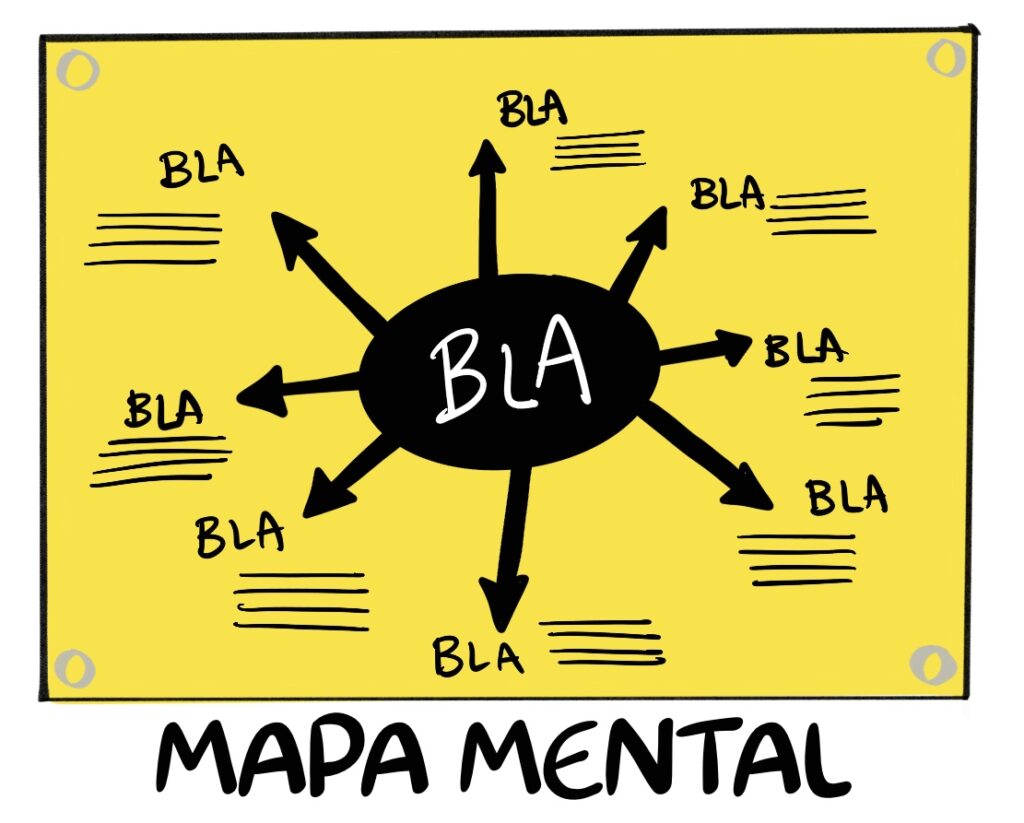
From a central anchor point, the summary of what has been discussed emerges radially.
This type of composition allows for a certain degree of freedom both in the collection of concepts and in the relationship between them, generating, if desired, a kind of ‘spider's web’ that allows concepts that have not been discussed sequentially to be linked.
Furthermore, this type of representation works equally well for recordings of keynote speeches, executive addresses, round tables, and brainstorming sessions.
STICKS
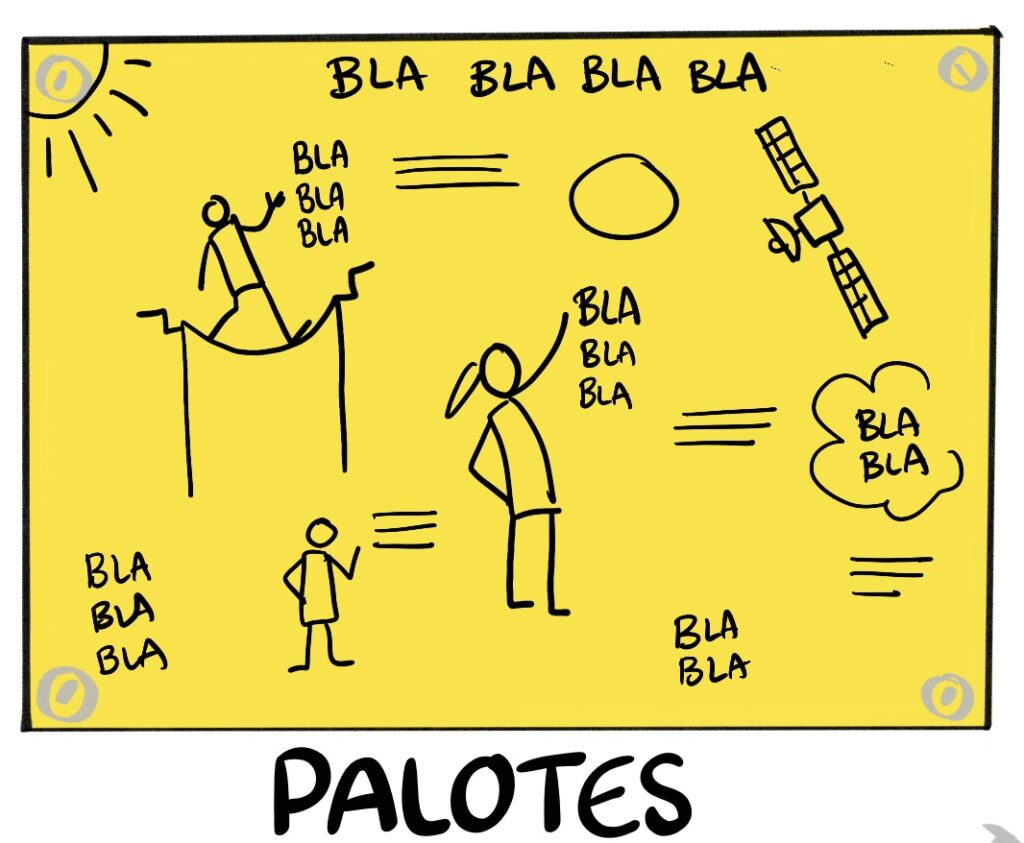
This drawing style is widely used around the world. It is quick and easy to adopt for artists who do not want to focus on the type of drawing, but rather on the subjects and processes involved.
The artist must be skilled enough to construct stories, movement and emotions with the limited resources of stick figure drawings, otherwise the result will be flat and, once again, lacking in emotion, meaning that viewers will not return to the document.
SYNTHESIZER
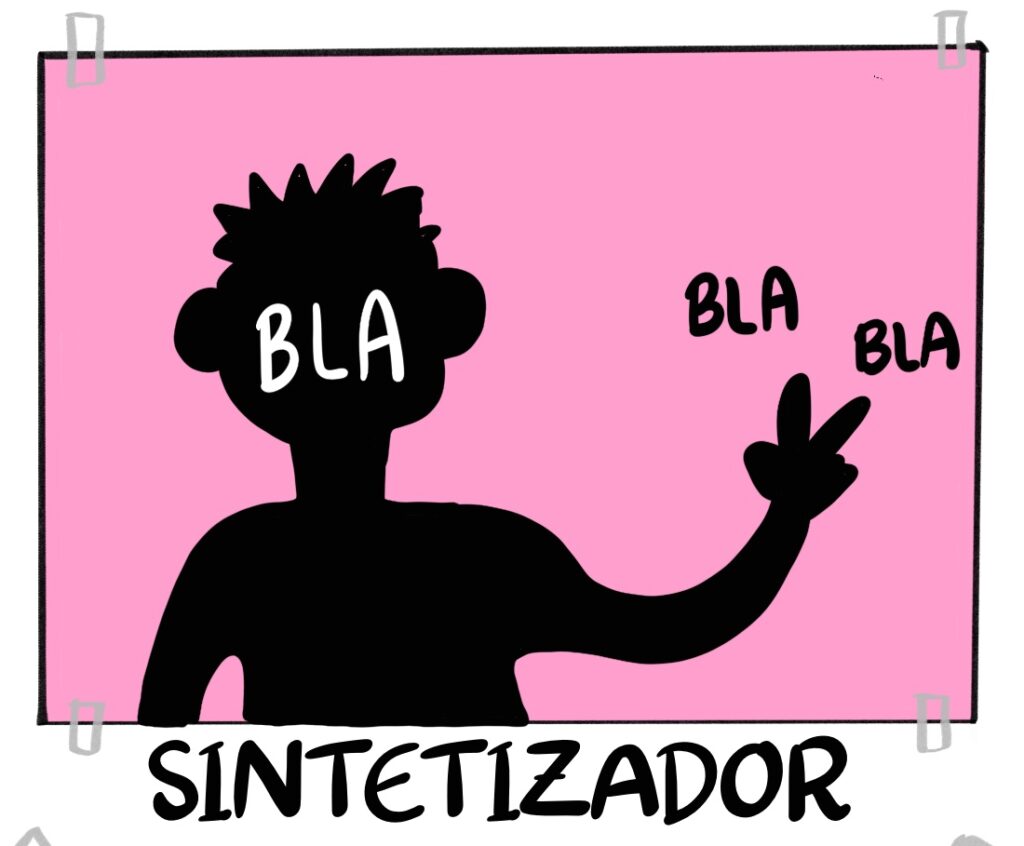
Less and less text, but the text chosen is really the key.
With a focus on the ability to synthesise and the creativity employed in constructing an image that is capable of summarising the overall tone of the conversation.
A clean result that is easily shareable, readable on all devices, and in which both the artistic and synthesis skills of the #graphicrecorder are essential.
TRANSCRIBER
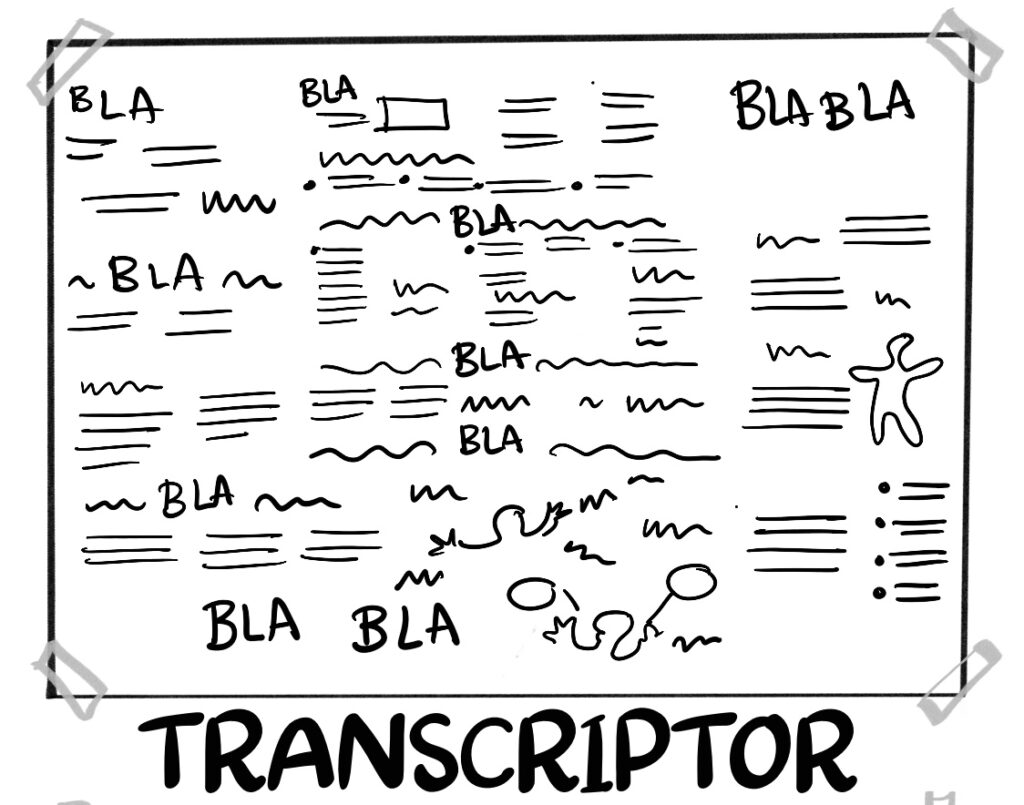
Not all visual summaries require drawings.
With a tidy canvas and a clear hierarchy of concepts, achieved through titles, sizes and even colours and shadows, you can take a transcriber to meetings where you don't want the artist to be the one doing the summarising.
Once again, you will face the lack of connections between the topics covered, or influences between them, and in return, you will obtain a document that is somewhat more user-friendly than a standard report.
STORYTELLER
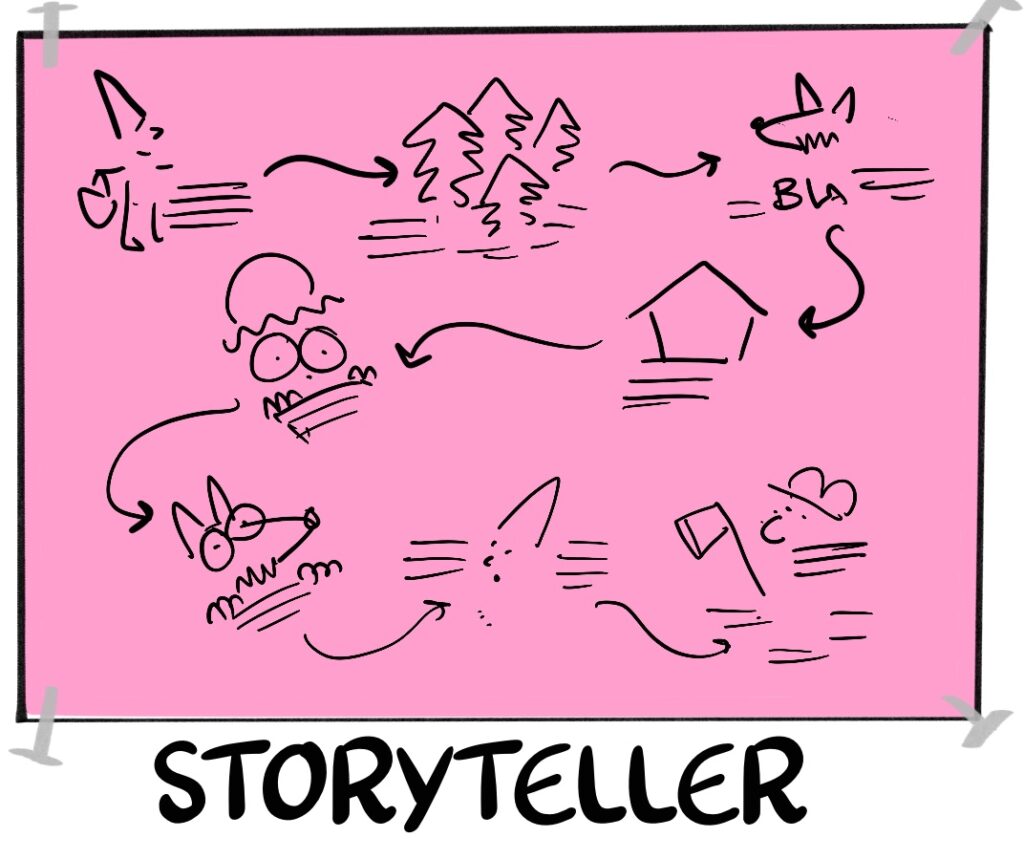
This style of drawing works very well when it comes to capturing life stories, business stories, or presentations by keynote speakers.
Accompanying an experienced speaker who evokes emotions and takes the audience where they want to go, the #visualstoryteller creates the ideal complement to the talk.
Attendees can relive the speech, linearly or otherwise, by navigating through the sequence of captured drawings and concepts.
ARCHER
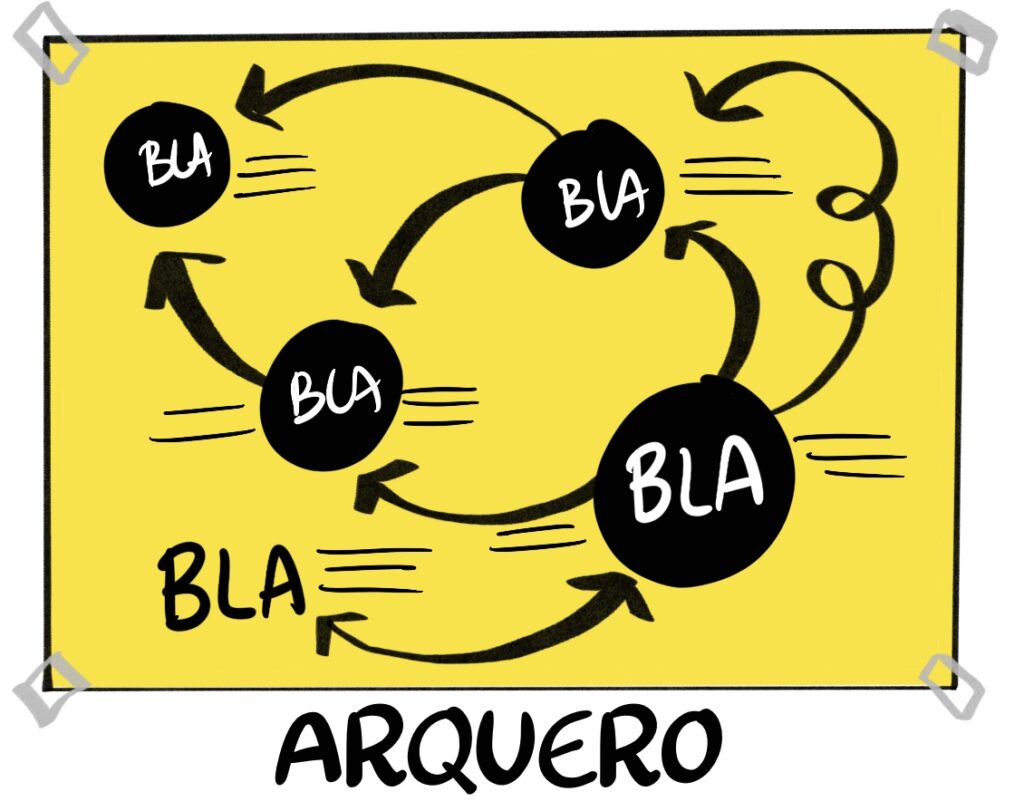
Connectors, or ‘arrows’ as we commonly refer to them, are this artist's primary resource.
The main ideas are captured in a ‘popcorn’ style but masterfully arranged in order of importance across the canvas.
Many of the texts are replaced by the intrinsic meaning of these arrows, for example cause-and-effect relationships, increases, decreases, roadblocks, processes, transformations, etc.
This strategy allows for a constant relationship between them, the creation of a network, almost a rhizome, in which every detail is collected and forms an indispensable part of the whole.
Overview and detail, at a glance.
POET
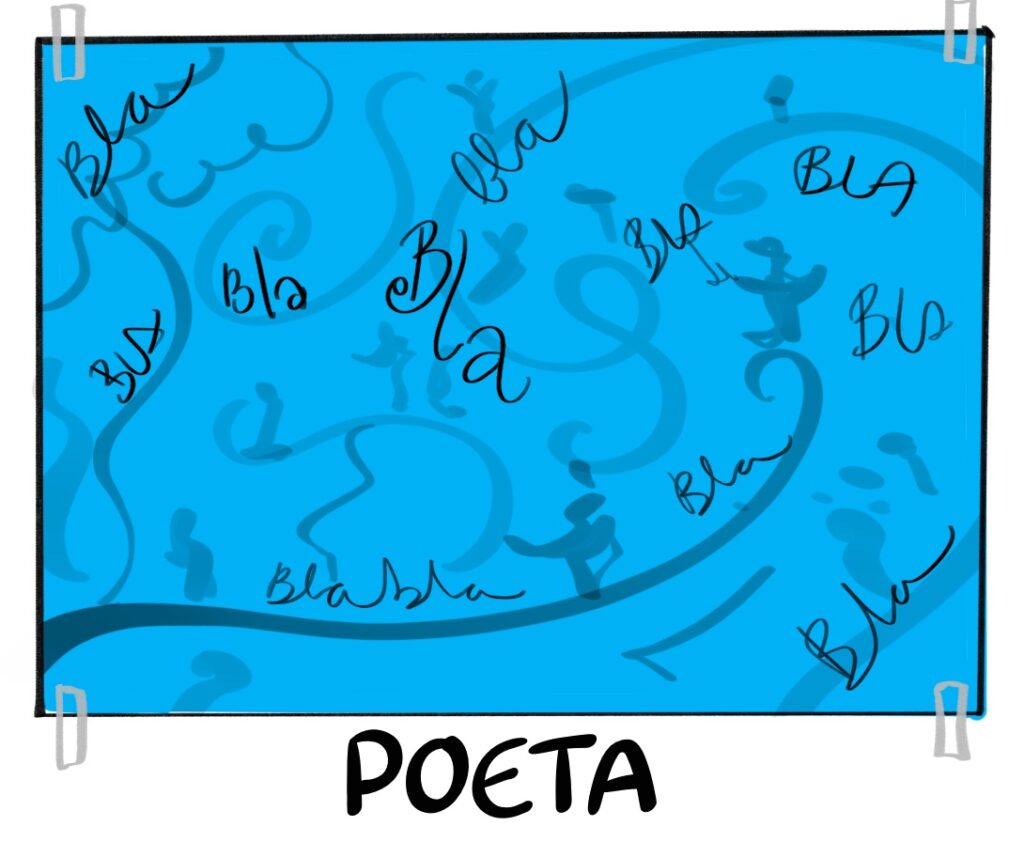
These artists take the storyteller style one step further.
I have named this style as such because the use of colour palettes, the characters depicted, and the use of brushes have an emotional and “poetic” effect.
You must ensure that the artistic representation continues to capture all the key and necessary information, i.e. that it not only produces an attractive illustration, but also serves its purpose as a documentary record.
I have created this grouping of styles after analysing the compositions of hundreds of colleagues around the world.
I would love to know which one is your favourite, why you think it best suits your needs and those of your client.
And if you're reading this, dear #graphicrecorder, I'd love to know if you identify with any of them.
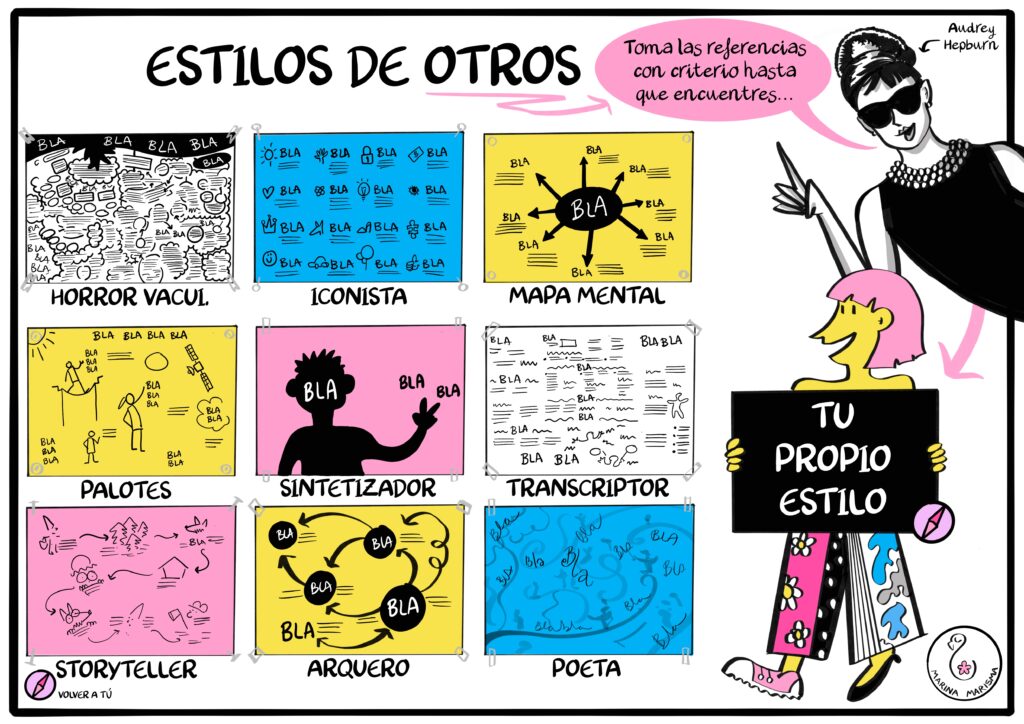
PS. This illustration is one of the pages from the book specialising in #visualthinking and #graphicrecording that I published over a year ago. Here are the links: Spanishand Enlgishs.
You can also find this article on LinkedIn. here


