I have a background in architecture, and when I choose metaphors to explain certain concepts, it comes to the fore. Because the ‘deliverable’ in architecture is not only a tangible object, but also a livable one. However, there is a lot of work behind it, and specifically, in that deliverable there is a whole ‘invisible’ world without which nothing would work: structures, systems, and installations.
When it comes to making our canvas ‘work’, we also have to choose its structure, those invisible lines that will enable the reader, participant or audience to understand the large amount of content we will be displaying.
To do this, we use LAYOUTS
Although many graphic recorders (myself included), often due to the nature of the work, flow freely and generate more complex compositions such as those I explained in this post: “HOW TO CHOOSE THE RIGHT ARTIST FOR YOUR EVENT: THE 9 STYLES OF LIVE DRAWING AT EVENTS AND MEETINGS”, Many others prefer to have a clear mental structure with which to organise information.
And not just mentally: graphically.
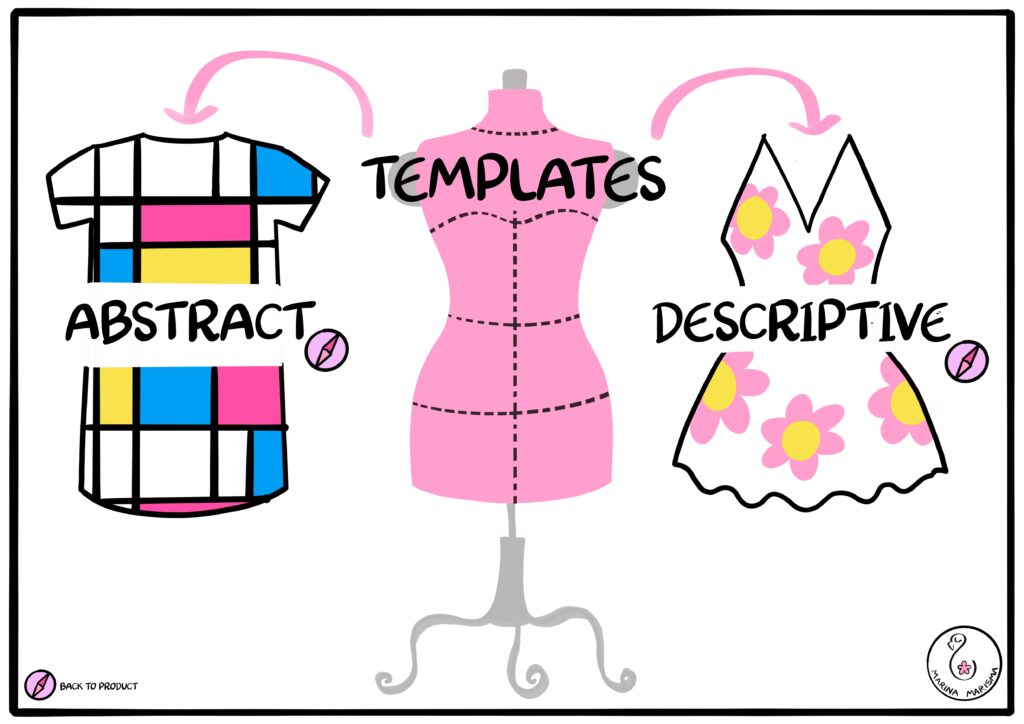
As if it were a sewing pattern, each of the pieces forms part of a whole that makes sense when they are related to each other.
There are two main groups of templates: Abstract layoutsand Descriptive Layouts.
THE 4 TYPES OF ABSTRACT LAYOUTS FOR GRAPHIC RECORDING AND GRAPHIC FACILITATION
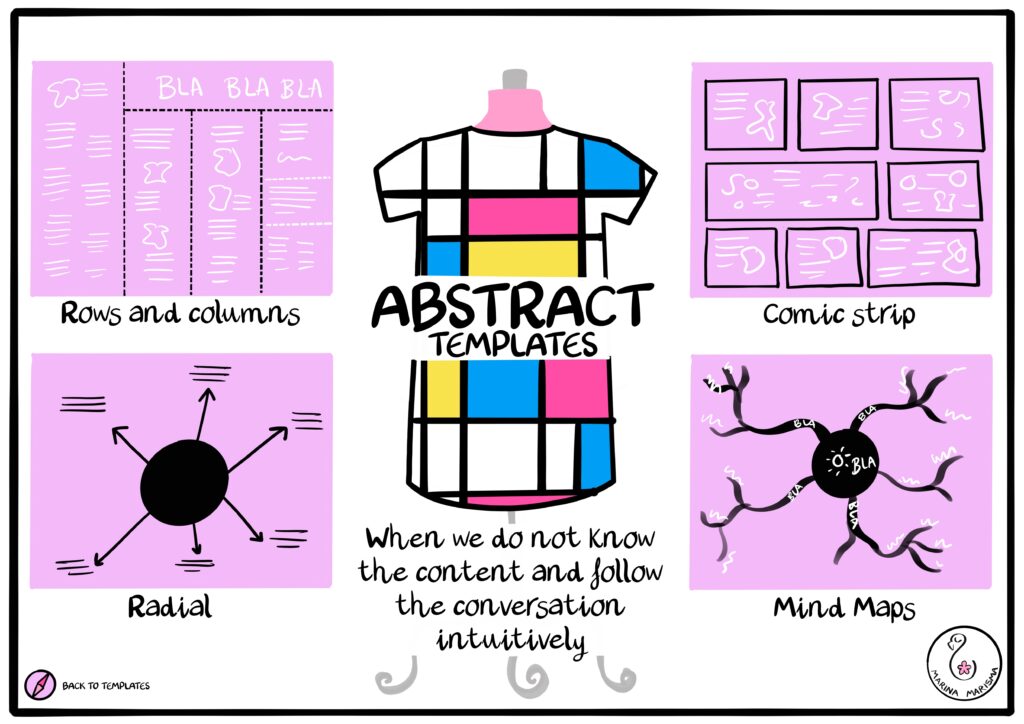
Choosing this type of template works very naturally when we do not know the content and follow the conversation intuitively.
In the graphic recording profession,extract and draw live the key ideas from the conversation as it happensI have attended numerous meetings where I did not even know the topic. (And also events with an audience, although in those cases it is usual to know at least the topic in advance).
In other words, it's not that I didn't know the content or the agenda, it's that I'm invited to the meeting without knowing whether we're going to talk about cybersecurity, artificial intelligence, health, customer service or sustainability.
In addition to the difficulty of not having the appropriate imagery available at that moment, and (why not say it) test and train creativityIt is both a challenge and a goal to produce a canvas, a deliverable, that is legible and useful both at that moment and in the future, helping the group to remember and return to the conversation, its key topics, and continue the debate.
When this occurs, I recommend these four types of layouts:
ROW AND COLUMN TEMPLATE
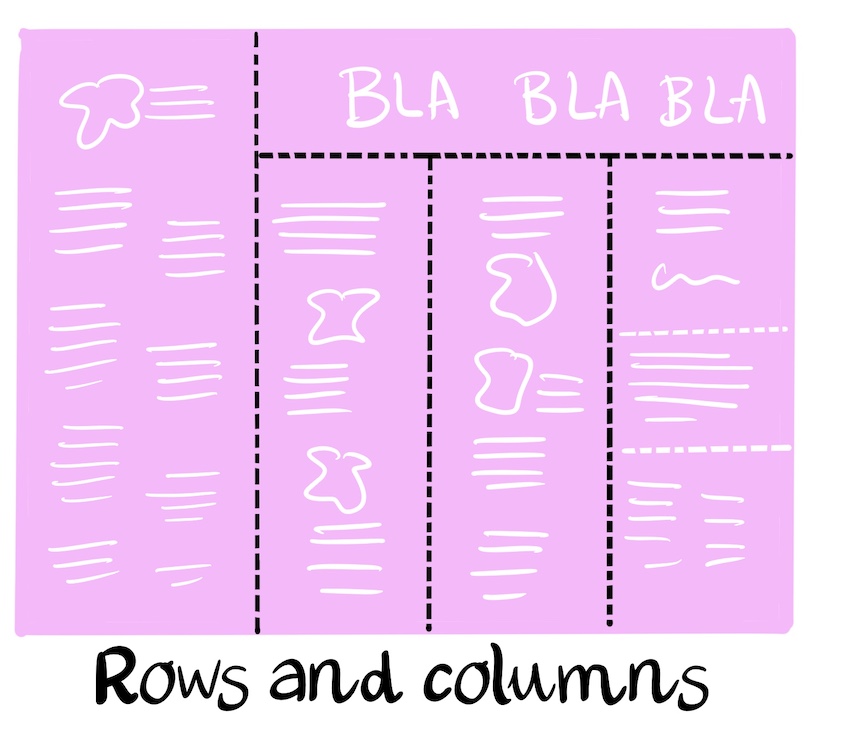
This layout is as intuitive as it is well-organised, so it works really well when we don't know what content will be covered.
The fundamental recommendation for differentiating yourself and adding value with this template is ensure that the content does not appear flatTo do this, I recommend placing a title that groups together the content that influences it.
Then, we just have to arrange the concepts discussed neatly underneath it, which does not mean that we should dispense with either drawing or colour.
COMIC STRIP LAYOUT
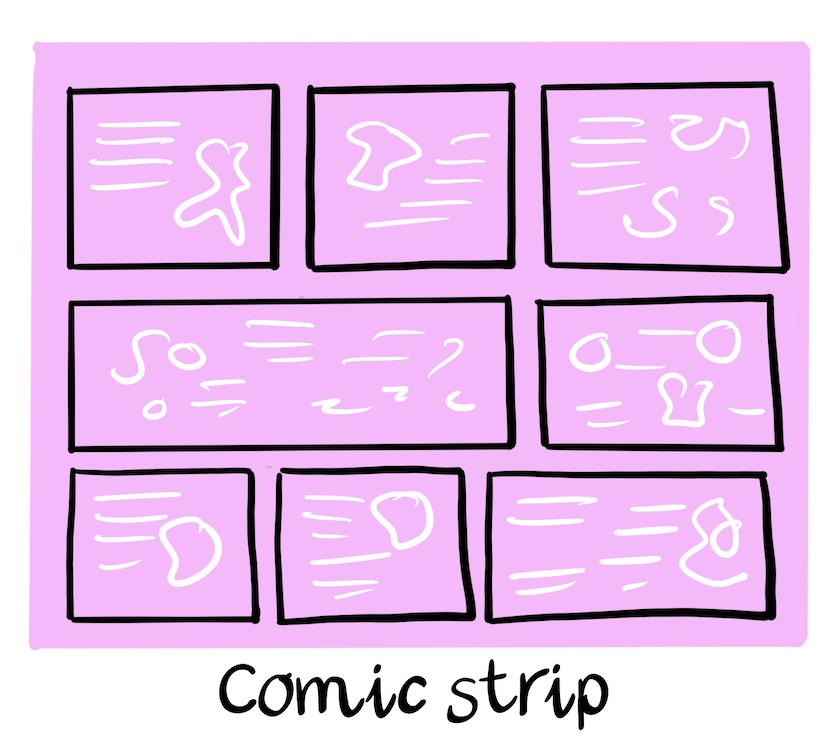
You may be wondering: How am I going to make a comic if I don't know the content?
Indeed, if this type of template works best when we do not know what will be said at the meeting, we have a problem.
But live drawing at events and meetings is not studio work; it is not about being a professional comic book illustrator, but about conveying the story.
The comic strip is basically a specialisation of the previous template (rows and columns), in which we use two strategies::
- La time sequence in which the ideas, concepts, and questions of the discussion have emerged
- Los containers or frames to group each of these concepts together. These frames can be actual line frames, or simply a splash of colour (usually a very light grey or blue) that helps us perceive the whole.
RADIAL TEMPLATES
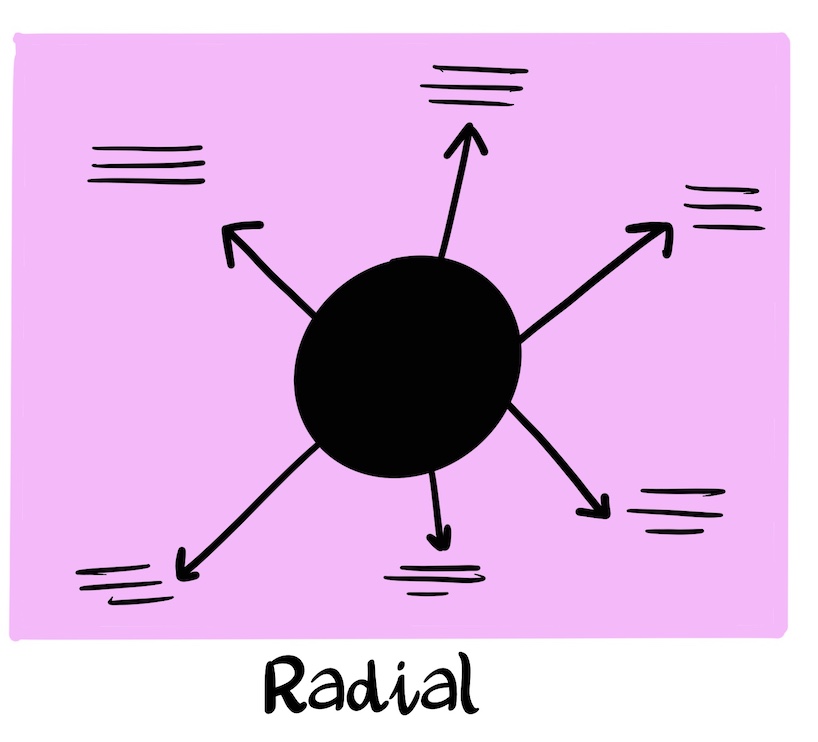
The radial template is as simple as it is effective:
Firstly, its structure is completely invisible, allowing us to start with a completely blank canvas, without any guidelines or any kind of ‘light’ lines.
As a recommendation, we must correctly locate the ‘centre’ of the canvas and how it is perceived. In other words, do we perceive the entire dimension of the canvas? Or does the existence of titles or logos make us perceive it differently?
Next, we must begin our drawing with a central image that will serve as an anchor for the rest of the content.
This image can also be a title, a metaphor; the important thing is that it allows us to return again and again to the main topic, from which the rest of the conversation emerges.
One recommendation to keep in mind is to always maintain balance in terms of graphic representation, i.e., the content should be evenly distributed, as if it were a clock, and not just grouped on one side.
MIND MAPS
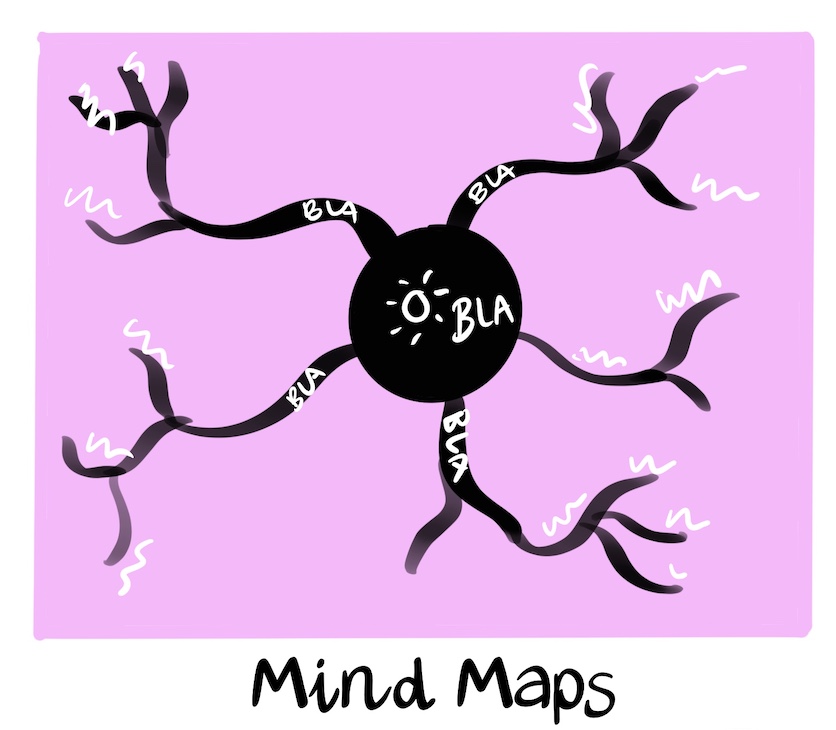
Made famous worldwide by Tony Buzan, this mind map structure is a variation or specialisation of the radial template.
The mind map is defined by specific rules regarding
- thickness and hierarchy of strokes
- use of colour,
- layout of icons and text
It requires excellent precision if we want to use it live, which is why I recommend, in any case, sticking to a basically radial structure in which we can apply our personal style and, above all, adapt it to the needs of the team.
THE 6 TYPES OF DESCRIPTIVE LAYOUTS FOR DRAWING IN BUSINESS MEETINGS, WORKSHOPS AND DYNAMICS
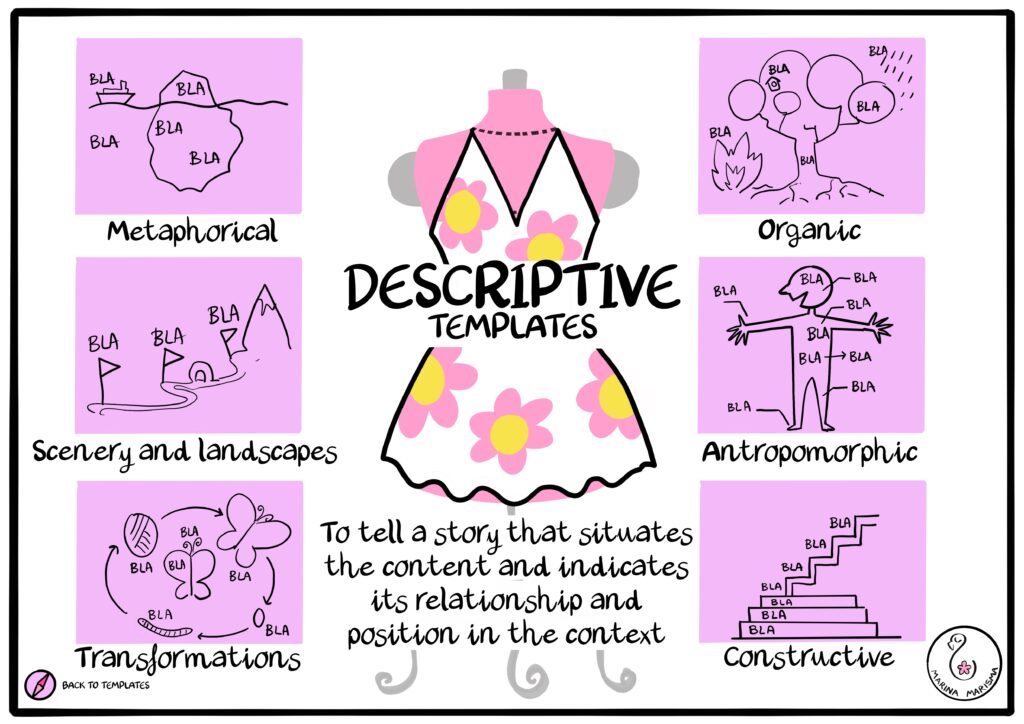
Now we're talking. We attend an event or a meeting where we know what problem we want to solve, Which group will participate or what is the topic and/or content?
This opens up a world of new possibilities, in which we can add value and connection with our imagination, and with how we arrange it on the canvas.
Descriptive layouts are ideal for telling a story that situates the content and indicates its relationship and position in the narrative.
Based on my experience, I have grouped the descriptive templates into six main categories.
THE 6 TYPES OF DESCRIPTIVE TEMPLATES FOR GRAPHIC RECORDING AND GRAPHIC FACILITATION
From this post, you can get an idea of the numerous possibilities open to you. Let's get started:
METAPHORICAL TEMPLATES
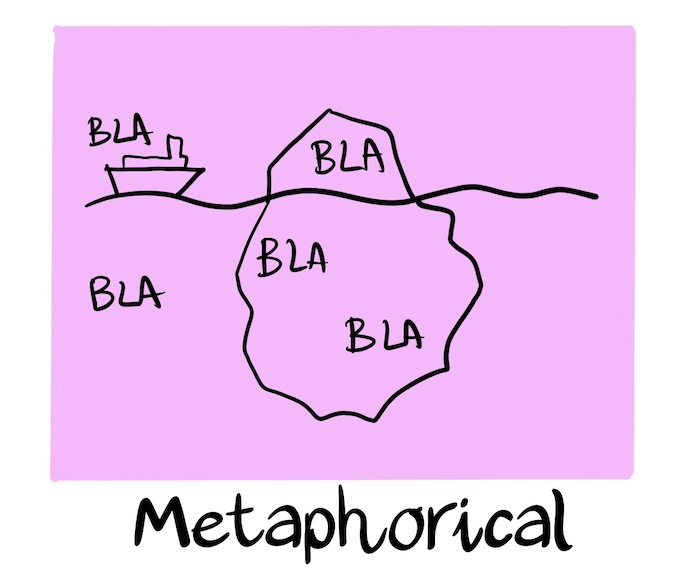
In reality, all the types of templates I am going to describe to you are based on this same premise:
The emotional and cognitive connection that links your audience, viewer or team to the contentby encompassing it within a recognisable image, with which you are able to construct a story.
And to tell stories, to create an image in our minds, metaphors already exist.
When we talk about templates, The metaphor translates into a very simple and easily recognisable image, which allows us to identify, even without naming them, each of the factors that apply in our case..
For example, an iceberg, a ship, or a hot air balloon.
- Using an iceberg template, we can work on analysing the situation.
What do we see? What do we not see? What does it support? What is at risk?
- With a boat-shaped template, we can explore leadership (who is at the helm?), teamwork, what holds us back, what drives us, what types of risks we take (visible or unplanned), what our goal is, and what we must do to achieve it.
- Con un globo aerostático: ¿qué nos impulsa? ¿Qué nos lastra? ¿Queremos soltar para avanzar? ¿Cómo nos influyen los cambios del entorno?
- A plane...
- A train...
- A house...
- A bridge...
- A fishing boat...
Now we are going to look at other approaches that will again help us to identify, analyse, recount and explore the different factors and comments that will arise in our meeting.
SCENERY AND LANDSCAPES
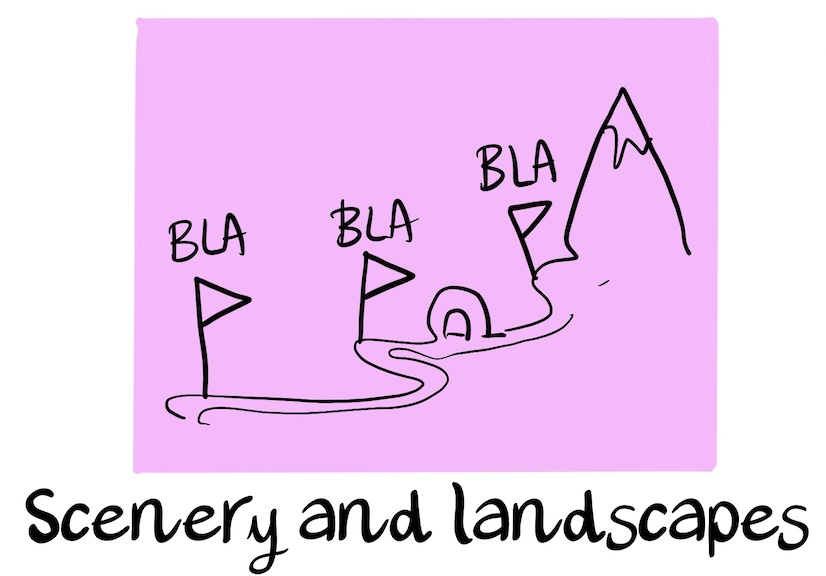
These types of templates work fantastically when the result of our canvas is going to be used to engage the team, to tell them, for example, about a process or our company's strategy.
When we are representing processes and/or strategies, it is ideal to opt for different representations of ‘pathways’:
In them, we will have identified (or perhaps it is precisely what we are looking for) an objective purpose, and to achieve it, we will have to go through different milestones.
If we depict a scene from the Wild West, we can draw different risks (attacks, lack of water, coyotes, visions, etc.), and if we depict climbing a high mountain, in addition to the risks, we can draw the effort that the team will have to make.
And in this way, we can choose the ideal setting for our story.
¿Estás en el sector de las infraestructuras o las comunicaciones? ¡Lo tienes muy fácil para elegir!
TRANSFORMATIONS
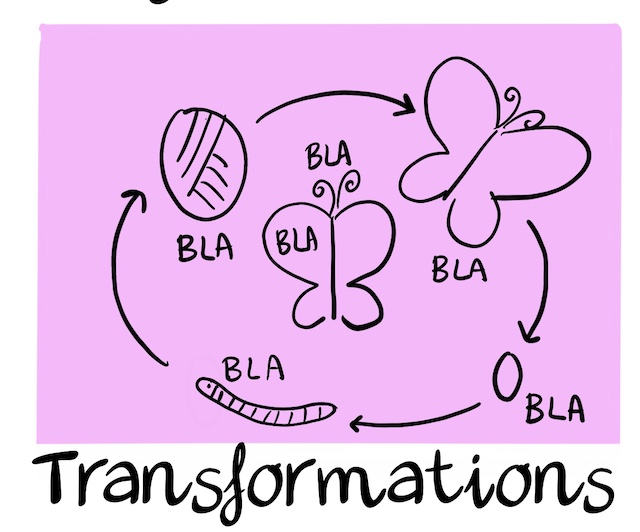
Oh, believe me, I know how difficult it is to represent these cases.
It is one thing to outline the strategy, or the process to follow when it has already been broken down or when we are analysing it, and quite another when we talk about represent the profound transformation that we must undergo personally, as a team, as a company or entity, in order to achieve it.
In recent years, we have seen how we have moved from putting the customer at the centre to putting the employee at the centre. We have seen how people have ceased to be mere ‘resources’ for companies, and how this talent is now valued, leading to a profound transformation from within the very heart of companies.
To represent transformations, I recommend drawing on the imagery of cyclical events that we are already familiar with, especially in nature. For example:
- The transformation of water into ice and vice versa
- The metamorphosis of a butterfly (or a frog, depending on your sector)
- The growth of a plant...
OGANIC LAYOUTS
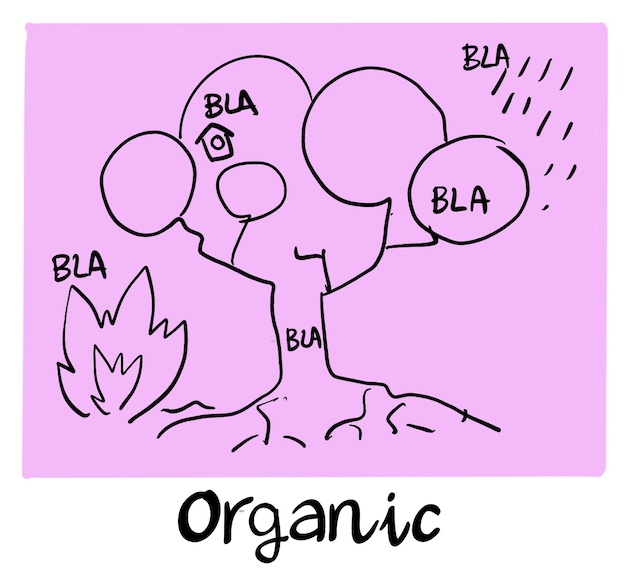
And it is precisely from these types of templates, which are already linked to natural examples, that we arrive at organic templates.
This type of template is based both on the metaphor itself that we saw a moment ago and on nature.
In this way, we are going to identify risks, weaknesses, strengths, opportunities, results, tools, and resources necessary within a drawing based on nature:
- A tree bearing apples, which we can pick with varying degrees of difficulty, and which we must water, prune and protect from storms, fires and pests.
- A sunflower...
- A flower...
- A hen...
ANTHROPOMORPHIC LAYOUTS
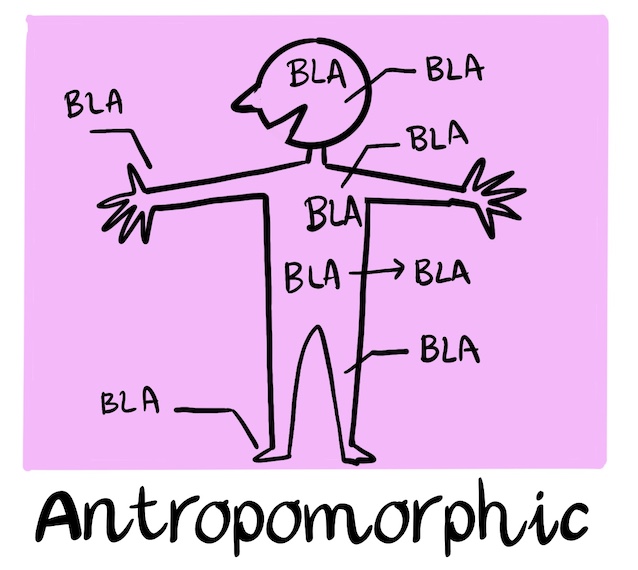
When it comes to natural forms, the one that has fascinated us since the dawn of time is undoubtedly the human figure.
Personally, I include many human figures in my graphic recordings. Not only as an analysis or compilation of information, a human figure allows us to represent and locate graphically:
- What the person thinks
- Listens to...
- Says...
- Does...
- How and with whom do you interact: Do you receive? Do you help? Do you ask? Do you work as part of a team?
- Así como cómo se sostiene, que lo motiva, de qué puede prescindir y de qué no…
CONSTRUCTIVE TEMPLATES
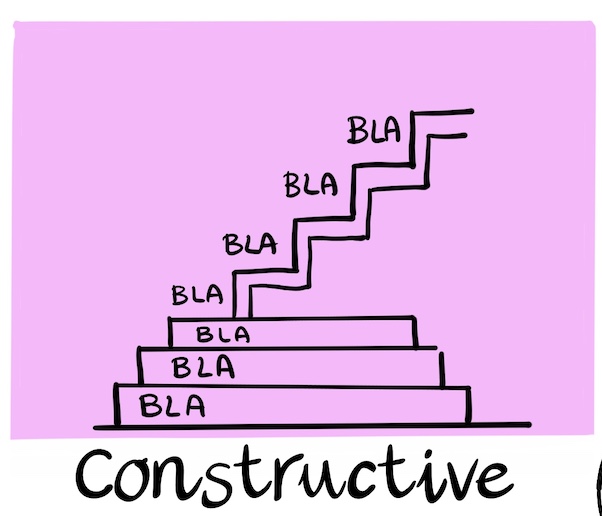
Returning to the world of processes and strategies, we often find ourselves on journeys where reaching a milestone does not mean we can forget about it, far from it.
Returning to the beginning of this article, the architectural metaphor.
Building on what has gone before. Laying the foundations and anchoring each construction element to the previous one.
Like a ladder where each rung is essential to move forward and reach the goal, we represent processes of learning, business building, and product development. We can visualise this ladder as follows:
- A staircase (with steps or treads)
- A pyramid
- A pagoda
- Any other constructive metaphor in which we visualise that we always rely on the above.
If you are a graphic facilitator or graphic recorder, I would love to know which of these templates appeals to you most. I invite you to design your own template linked to your meeting and your team!
- To do this, think of a metaphor that you can relate to your client and, from there, find the image that best fits the story.
If you are a consultant and want to explore this topic further, but don't feel like putting your creativity to the test, you can check out the book.bikablo posters: visual dictionary for flipchart templates, methodology posters & pictorial words” where you are sure to find the template you need for your meeting.
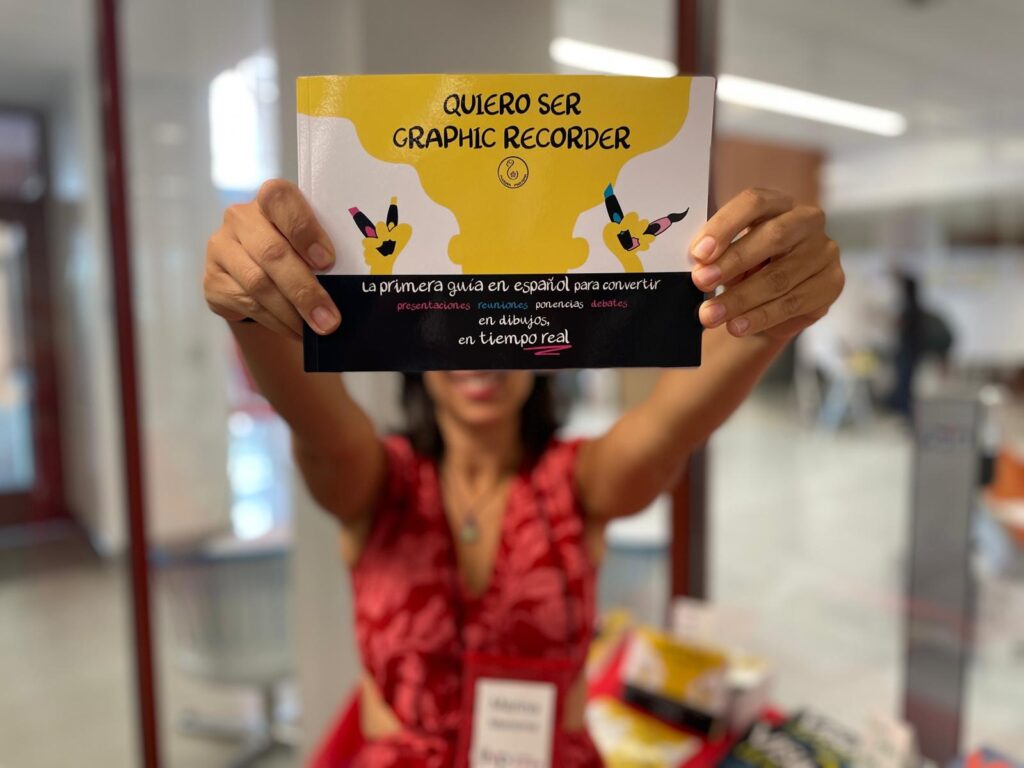
Of course, you can also purchase my book (on which this post is based) or call me so that I can accompany you to your meeting.
If you liked this article, share it!
If you don't follow me on social media yet... you know what to do!
Thank you very much for reading this far.